How Bladder Irritants, Hormones, Diet, and Stress Shape Your Symptoms
Installment 4 of Labora Collective's Painful Bladder Syndrome Series - A Journey to Validation and Relief.
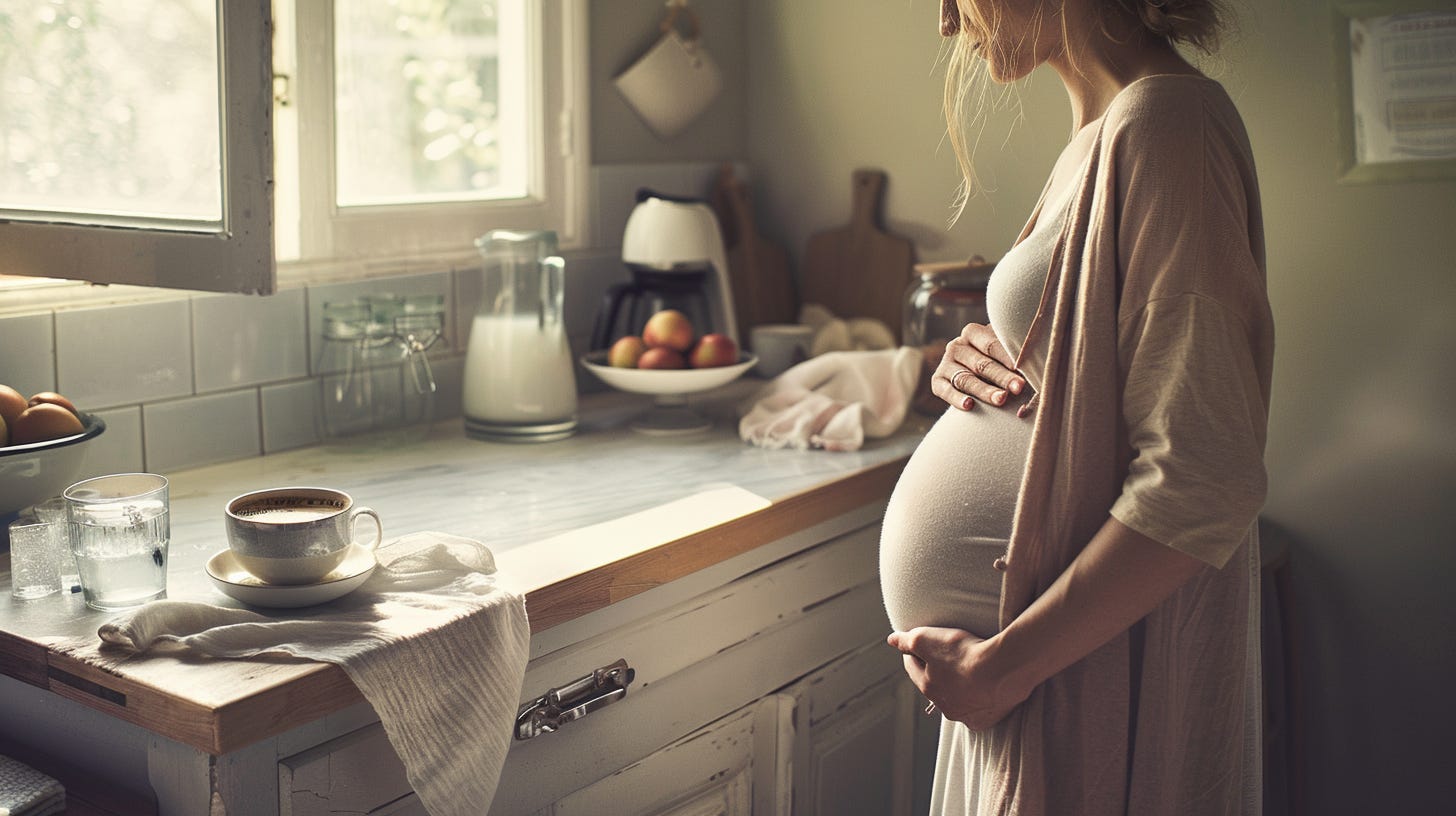
Living with painful bladder syndrome during pregnancy means living inside a body that reacts intensely to things most people never think about. For many patients, the maddening part is not the pain itself but the unpredictability of it. Why is one day manageable and the next unbearable? Why can you drink coffee one morning without consequence and find yourself doubled over the next? Why does a certain food seem benign one week and intolerable the next?
None of this inconsistency is imagined.
It reflects the complex set of forces acting on your bladder during pregnancy—forces we can’t eliminate, but can learn to navigate.
📡 The Bladder Is an Organ of Sensation
The bladder is an organ of sensation. Unlike the heart or lungs, which function largely outside conscious awareness, the bladder constantly sends messages to your brain about fullness, pressure, discomfort, and urgency. When the bladder lining is irritated—because the protective sugar layer is disrupted or inflamed—those sensations become amplified.
What someone else might experience as a mild urge hits your nervous system like an alarm.
That amplification is the first reason irritants matter so much.
Highly acidic drinks like citrus juices can trigger a disproportionate response when they contact exposed areas of the bladder lining. Caffeine, which increases urine production and can stimulate bladder contractions, can feel like pouring fuel on a smoldering fire. Alcohol, even in small amounts, behaves similarly. These are not universal triggers; they are common ones. But the only way to know which irritants matter for you is to observe your body closely—which is where the bladder diary becomes indispensable.
😰 Stress: The Amplifier Nobody Talks About
Stress is another potent amplifier. When your body is under strain, your muscles—including the pelvic floor—tighten. Those muscles sit under and around the bladder. When they contract for long stretches, they can create a sense of pelvic tension, urgency, and pressure.
Many people with painful bladder syndrome have no idea how much stress is contributing to their pain until they begin to connect the dots between emotional strain and urinary symptoms.
🤰 Why Pregnancy Magnifies Everything
Pregnancy magnifies all of this. Hormonal shifts can destabilize the bladder’s protective lining. Increased blood flow to the pelvis heightens sensation. And the physical weight of a growing uterus changes the mechanics of bladder filling and emptying.
Even a healthy bladder can feel overwhelmed under these conditions. A sensitive one may feel constantly pushed beyond its limits.
🧭 Gaining Control Over What You Can
The point is not that you should eliminate everything that might irritate your bladder. Pregnancy already demands enough. The point is that once you understand the relationship between irritants, hormones, stress, and bladder sensitivity, you gain the ability to adjust your environment instead of feeling assaulted by it.
If you know that acidic foods consistently worsen your symptoms, you can limit them. If caffeine makes your urgency intolerable, you can shift to decaffeinated options. If stress intensifies your pain, you can introduce small grounding practices—breathing, stretching, movement, rest—that soften the impact.
None of these strategies will cure painful bladder syndrome outright. They are tools for lowering the baseline irritability of your bladder so that the unavoidable triggers—pregnancy hormones, pelvic pressure, days when you cannot rest—don’t push you into crisis.
Small adjustments can translate into meaningful relief, especially when pharmaceutical options are limited.
The goal is not perfection. It’s steadiness.
And steadiness, in a condition defined by unpredictability, is a quiet form of freedom.
References
Shorter B, Lesser M, Moldwin RM, Kushner L. Effect of comestibles on symptoms of interstitial cystitis. J Urol. 2007;178(1):145–52. https://doi.org/10.1016/j.juro.2007.03.020
Vasiadi M, Kempuraj D, Boucher W, Kalogeromitros D, Theoharides TC. Progesterone inhibits mast cell secretion. Int J Immunopathol Pharmacol. 2006;19(4):787–94. https://doi.org/10.1177/039463200601900408
Chaban V. Visceral pain modulation in female primary afferent sensory neurons. Curr Trends Neurol. 2015;9:111–114. PMID: 26962272
Birder LA, Hanna-Mitchell AT, Mayer E, Buffington CA. Cystitis, co-morbid disorders and associated epithelial dysfunction. Neurourol Urodyn. 2011;30(5):668–72. https://doi.org/10.1002/nau.21109
Clemens JQ, Nadler RB, Schaeffer AJ, Belani J, Albaugh J, Bushman W. Biofeedback, pelvic floor re-education, and bladder training for male chronic pelvic pain syndrome. Urology. 2000;56(6):951–5. https://doi.org/10.1016/s0090-4295(00)00796-2
Yu WR, Jhang JF, Jiang YH, Kuo HC. The pathomechanism and current treatments for chronic interstitial cystitis and bladder pain syndrome. Biomedicines. 2024;12(9):2051. https://doi.org/10.3390/biomedicines12092051
Hanno PM, Erickson D, Moldwin R, Faraday MM. Diagnosis and treatment of interstitial cystitis/bladder pain syndrome: AUA guideline amendment. J Urol. 2015;193(5):1545–53. https://doi.org/10.1016/j.juro.2015.01.086
This is a 7-part series. Read the full series below:
Part 1: When the Tests Are Negative but the Pain Is Real
Part 2: What Painful Bladder Syndrome Actually Is—and Why Pregnancy Makes It Worse
Part 3: The Bladder Diary as a Tool for Transformation
Part 4: How Bladder Irritants, Hormones, Diet, and Stress Shape Your Symptoms ← You are here
Part 5: Preparing for Labor and Delivery When You Have Bladder Pain
Part 6: What Happens After Birth—The Path to Long-Term Treatment
Part 7: What It Means to Be Believed—Pain, Pregnancy, and the Politics of Care
Dr. Yamicia Connor, MD, PhD, MPH
Founder & CEO, Diosa Ara | Creator & Editor-in-Chief, The Labora Collective

The Labora Collective publishes at the intersection of clinical care, policy, and innovation — because only 10% of your health outcomes come from the exam room. The other 90% is what we cover.
Explore the Labora Collective → Member Home: Start Here
Become a Member → Subscribe to The Labora Collective by Diosa Ara: Member Edition
Message from our founder → Read Viva Voce: Come Inside the Build